Choosing among China’s top 10 Ball Mill SAG Mill Liner Manufacturers takes more than comparing catalogue prices. Liners shape impact, grinding efficiency, mill availability, and maintenance demands. A few millimetres of profile difference can change how ore moves across the shell. Material selection matters too: alloy chemistry, hardness, and heat treatment should match the ore, mill speed, and operating conditions.
A useful, clearly paraphrased takeaway from mineral-processing author Barry A. Wills’s process-focused work is: “Liner selection should serve the whole grinding circuit, not wear life alone.” Treat this as a summary, not a verbatim quotation. A reliable supplier should explain its design assumptions, show relevant operating references, and support installation and wear monitoring. Ask for details on liner mass, expected service life, bolt arrangement, and inspection intervals. Then compare those claims with site records, not just a polished brochure.
This guide examines ten Chinese manufacturers through practical questions: What mills do they serve? Can they document comparable applications? How do they handle design changes and after-sales support? Rankings can shift with project scale, ore type, and evaluation criteria. That is worth admitting. A strong factory may still be a poor fit for one plant, and a lower quotation may hide longer lead times or limited engineering support. The best choice is the one whose evidence matches your operating reality.
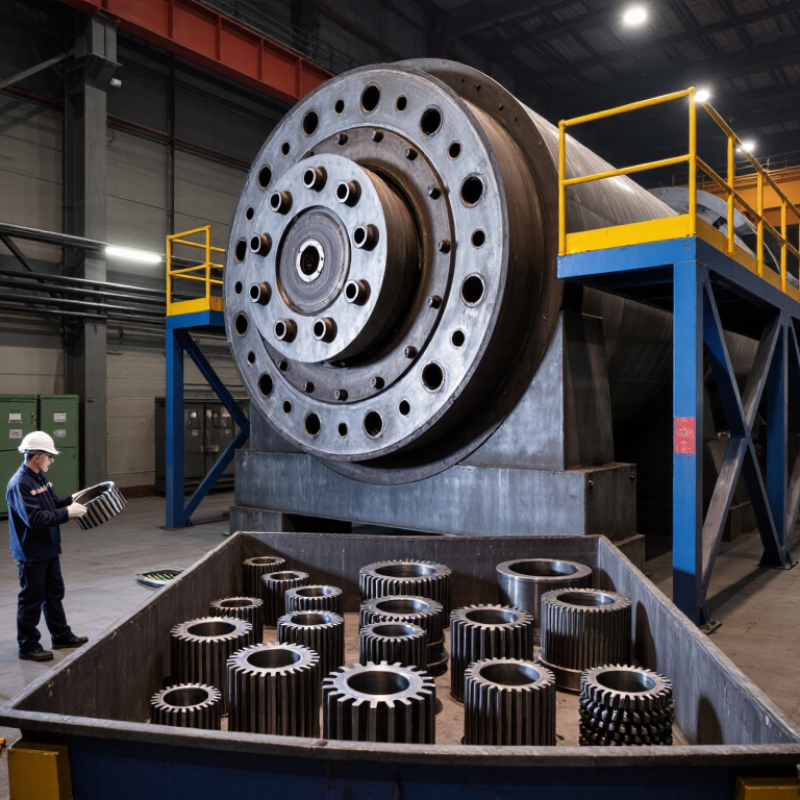
In a SAG mill, coarse ore and steel balls combine in a large, moving charge. Rocks can fall several metres, striking liners with concentrated impact. The result is heavy local loading, followed by abrasion as the charge slides. Ball mills usually handle finer material. Their smaller balls create frequent, repeated contacts, so abrasion and many lower-energy impacts often dominate. Impacts still matter: a dropped ball can chip a lifter or start a crack.
Impacts dominate. But not everywhere.
The JKMRC drop-weight test relates specific impact energy, measured in kWh/t, to t10, the percentage of a particle that breaks below one-tenth of its original size. This method is described in Napier-Munn et al., Mineral Comminution Circuits (1996). It characterizes ore breakage, not liner life directly. That distinction is easy to overlook. For liner selection, compare impact-test results with site records: ore size, mill speed, liner wear in millimetres, and operating hours. A single “best” profile can mislead; feed hardness and charge motion change the duty. Even a careful estimate needs revision after real wear patterns appear.
A credible China top-ten ball mill and SAG mill liner ranking should compare verified production capacity, not catalogue claims. Ask for annual output in tonnes, press or mould capacity, alloy-testing records, and recent delivery references. Capacity figures need context: a large stated output means little if the plant cannot show consistent hardness results across thick, curved liner sections. The ISO Survey 2022 recorded over 1.26 million valid ISO 9001 certificates worldwide; certification signals a quality-management system, not proof of liner performance. Treat it as one check, not a medal.
For a fair shortlist, score capacity, certifications, material control, and references separately. Request certificates with valid scope and dates, plus anonymised order records for comparable mill sizes. World Mining Data 2024 tracks production across mineral commodities, illustrating why liner demand and operating conditions vary by mine. It does not rank liner factories. Public data rarely provides independently audited, comparable output figures for every Chinese supplier, so any top-ten list should disclose its method and gaps. This part is easy to get wrong.
Tips:
Ask for a recent test report tied to the supplied alloy batch. Compare wear measurements from matching mill conditions, not isolated service-life claims. A site reference is useful; an unverified testimonial is not.
In SAG and ball mills, high-chrome liners are often judged by their resistance to abrasive wear. A reported hardness of 600–700 HB can provide a useful material benchmark, but it does not guarantee a long service life. Hardness helps resist sliding wear from ore and steel balls. Impact matters too. An overly hard liner may crack under repeated heavy impacts if its alloy structure or heat treatment is unsuitable. That trade-off is easy to overlook.
Ask how hardness was measured and whether readings represent the working surface or the liner’s core. Compare test methods and locations before judging supplier data; numbers are less useful when the conditions differ. Check liner thickness, casting quality, and fit as well. Ore size, ball charge, mill speed, and liner geometry all influence wear patterns. A smooth certificate cannot show every casting defect. Even at 600–700 HB, service results can vary, and the causes are not always obvious. That uncertainty deserves attention.
Material benchmark, not a manufacturer ranking: This comparison summarizes common mill-liner material and design categories. Hardness figures are indicative ranges; actual properties depend on alloy grade, heat treatment, section thickness, impact conditions, and supplier specifications.
| No. | Liner material or design | Indicative hardness | Typical mill use | Key characteristics | Selection consideration |
|---|---|---|---|---|---|
| 1 | High-chrome white iron | Approximately 600–700 HB | Ball mills; selected lower-impact grinding duties | High abrasion resistance and hardness. | Can be brittle relative to ductile steels; check impact severity and casting design before use in high-impact zones. |
| 2 | Low-chrome white iron | Grade-dependent; commonly around 350–550 HB | Ball mills and some abrasion-dominant duties | Wear-resistant cast iron with a broad range of chromium content and properties. | Confirm the specified alloy and heat treatment; “low chrome” does not indicate one universal hardness. |
| 3 | High-manganese steel | Often approximately 180–250 HB as supplied; the impact-work-hardened surface can become substantially harder | SAG mills and high-impact zones | Ductile material that can work-harden under suitable impact conditions. | May wear quickly where impact is insufficient to produce useful work hardening. |
| 4 | Alloy steel | Commonly around 300–450 HB, depending on grade and treatment | Ball mills and SAG mills | Heat-treated steel offers a balance of strength, toughness, and wear resistance. | Match hardness and toughness to ore abrasiveness, impact level, and liner section thickness. |
| 5 | Quenched-and-tempered steel | Typically specified within an application-dependent range; often about 300–450 HB | SAG and large ball mills | Heat treatment can provide a combination of hardness and impact toughness. | Request test certificates and verify that hardness is measured at representative locations. |
| 6 | Rubber liner | Usually specified on the Shore A scale, not the Brinell (HB) scale | Ball mills and selected fine-grinding applications | Low weight, noise reduction, and corrosion resistance in suitable duties. | Check temperature, impact energy, feed size, and chemical compatibility; do not compare Shore A directly with HB. |
| 7 | Rubber–metal composite liner | Metal inserts have grade-specific HB values; rubber is rated separately | SAG and ball mills where a hybrid design is suitable | Combines metal wear or impact elements with a lighter rubber body. | Performance depends on insert layout, bonding, fastening, and the mill’s impact profile. |
| 8 | Steel-backed rubber liner | Steel backing is grade-specific; rubber hardness is reported separately | Ball mills and selected mill zones | Uses a steel structure with a rubber wear surface to combine support and cushioning. | Assess wear-layer thickness, attachment design, and replacement requirements for the specific mill. |
| 9 | High-chrome alloy steel liner | Depends on alloy and heat treatment; verify the supplier’s specified HB range | Ball mills and selected abrasion-intensive applications | Designed to balance wear resistance with greater toughness than some white irons. | Material names vary; compare certified composition, hardness, and impact-test data rather than labels alone. |
| 10 | Segmented or modular liner assembly | Depends on the material used for each segment | Ball mills and SAG mills | Individual sections can simplify handling and replacement; segments may use different profiles or materials. | Check joint design, bolt or fastening arrangement, fit, and compatibility with the mill shell and operating conditions. |
Benchmark note: Brinell hardness (HB) is not a complete measure of liner performance. Compare material certificates, toughness or impact data, liner geometry, operating conditions, and wear-life records for the specific application.
When comparing China’s ball mill and SAG mill liner manufacturers, request site data, not catalogue claims. Measure wear life in operating hours and tonnes processed to the agreed discard limit. Record throughput in tonnes per hour alongside feed size, ore hardness, mill speed, and liner profile. Otherwise, a longer life may simply reflect softer ore or lower production. The International Energy Agency’s Energy Efficiency 2023 report notes that industry uses about 37% of global energy. That figure is not a liner benchmark, but it shows why grinding efficiency deserves attention.
Track liner-change time from shutdown to restart, and separate hands-on labor from total mill downtime. The Global Mining Guidelines Group’s 2016 Bond-efficiency guideline offers a useful framework for assessing grinding-circuit energy performance; pair that analysis with liner and production records. Compare campaigns under similar conditions, then calculate tonnes processed per millimetre of wear and tonnes lost during change-outs. Keep the raw shift logs. The comparison can be messy. Small gaps in recording can distort results, and one short trial rarely proves a design is superior. A fair supplier review should show the measurement method, operating conditions, and uncertainty behind each number.
Treat ASTM A532 as a starting point, not a performance guarantee, when comparing ball and SAG mill liners. Ask suppliers for the exact class and type, heat number, chemistry, and hardness range for each casting. Check that the grade suits your ore’s abrasiveness, impact load, and mill speed. A grade name alone is not enough. Request material certificates traceable to the delivered parts.
Review how quality is verified. Ask for hardness readings from several marked locations, along with the test method and acceptance limits. For critical castings, request metallography and documented checks of surfaces and dimensions. Clarify whether non-destructive testing is specified and which areas it covers. ASTM conformity does not prove a liner will last longer in your mill. A neat report can still miss local variation.
Plan a controlled mill-site trial before changing the full set. Record liner thickness at installation, operating hours, feed conditions, throughput, and shutdown findings. Photograph the same zones during inspections; measure wear near lifter corners and bolt holes. Compare results with a similar operating period, noting changes in ore and maintenance. Keep spare liners available. Trials take time. Results can be messy. If bolts move or cracks appear, investigate promptly rather than explaining them away.