Choosing a crusher plate is not a minor maintenance decision. It directly affects throughput, product shape, downtime, and operating cost. The U.S. Geological Survey reported approximately 1.5 billion metric tons of crushed stone production in the United States during 2023. That volume reflects the constant pressure placed on primary crushing equipment. Every worn tooth changes the crushing chamber’s geometry. Small changes can become expensive production losses.
The OECD’s Global Material Resources Outlook to 2060 projects global material use could reach 167 billion tonnes by 2060, compared with 79 billion tonnes in 2017. More material demand will increase the need for dependable jaw crusher performance. However, higher production alone should not dictate your selection. Feed size, rock abrasiveness, moisture, crusher settings, and maintenance access matter just as much. A hard plate may resist wear, but it can perform poorly under heavy impact. A common manganese grade may work well in one quarry and fail quickly in another.
There is no perfect choice.
This guide presents seven practical tips for selecting the right Swing Jaw Crusher Plate. It examines material composition, tooth profile, thickness, casting quality, operating conditions, and replacement timing. Field experience shows that visual inspection often misses subsurface cracking or uneven wear. Therefore, reliable decisions should combine inspection records, production data, and the manufacturer’s technical recommendations. The advice also recognizes an uncomfortable reality: many plate failures result from incorrect installation or unsuitable feed control, not poor casting quality. Review each factor carefully before ordering, and treat past wear patterns as evidence rather than assumptions.
Choosing the right swing jaw crusher plate starts with the duty, not a catalog photo. Measure the largest feed lump entering the chamber. Do not trust the stated nominal size alone. Real sites often receive occasional oversize. That detail changes plate stress, wear, and crushing stability.
CSS
CSS means closed-side setting. Record the CSS during operation, not only during maintenance. Then estimate the reduction ratio by dividing feed top size by the desired product size. A 4:1 ratio usually represents a less aggressive duty. A 6:1 ratio demands more size reduction from each pass. For example, 600 mm feed with a 100–150 mm target product falls within this working range. Keep it practical.
Use seven checks before ordering a plate: feed size, CSS, reduction ratio, feed variability, rock abrasiveness, moisture, and wear pattern.
Abrasive stone may need a tougher wear-resistant alloy, while impact-heavy feed needs better resistance to cracking. Inspect the old plate’s high-wear zones. A deep groove near the lower chamber can indicate an unsuitable profile or poor feeding.
The first setting is rarely perfect. I have seen a plate perform well on paper, then wear quickly after wet, sticky feed arrived. Change one variable at a time, and record product size, power draw, and plate condition after each trial. Watch the pattern.
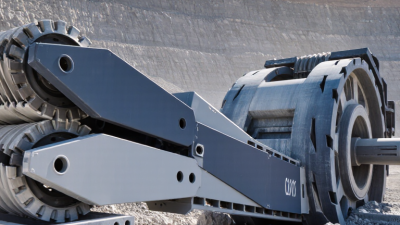
Choosing the right swing jaw crusher plate starts with understanding impact conditions, not only material hardness. A plate facing large, uneven feed needs stronger work-hardening potential. For moderate impact and controlled feed, 11–14% manganese steel can provide balanced wear resistance and easier replacement costs. For severe impact, 18–22% manganese steel is often the safer choice.
Check the feed size, discharge setting, and crushing cycle. Large rocks striking the jaw repeatedly may justify higher manganese content. Inspect moisture and clay levels too, because sticky material can create packing and uneven pressure.
Confirm the plate’s chemical composition and heat-treatment records. Manganese percentage alone is not enough. Actual performance depends on toughness, carbon balance, and casting quality.
Watch the first week of operation. Measure plate profile, check bolt tightness, and record unusual vibration. A properly selected plate should develop a hardened working surface without cracking. I once focused too heavily on abrasion and underestimated impact energy; the plate wore unevenly and required early adjustment. That mistake remains useful.
Ask for laboratory hardness data, but compare it with real site conditions. Review liner rotation intervals, inspect the feed chamber, and avoid oversized material entering continuously.
These small checks often reveal whether 11–14% or 18–22% manganese steel truly fits the application.
Choosing the right swing jaw crusher plate starts with the closed-side setting, or CSS. For a 50–200 mm CSS range, tooth profile and plate thickness must work together. CSS is not the same as feed size. Measure it at the crushing chamber, not from a control panel alone.
For a 50–80 mm CSS, use a sharper tooth profile with moderate thickness. It helps grip rock and maintain a stable nip. At 100–150 mm CSS, a medium profile usually provides balanced penetration and wear resistance. For 150–200 mm CSS, deeper teeth may improve grip on larger lumps. Excessively sharp teeth can break under heavy impact. That lesson is easy to miss.
Plate thickness should match feed hardness, lump size, and operating speed. A thicker plate can resist impact, but it may reduce chamber volume and alter the effective CSS. Thin plates may expose the backing surface too soon. Check the feed gradation before selecting thickness. Large, irregular rocks need more support than evenly screened material.
Record tooth height and plate weight during inspections. If the teeth become rounded quickly, the profile may be too shallow for the selected CSS. If cracks appear near the mounting area, review support, tightening, and impact conditions. I would not judge plate quality by wear life alone. Stable product size and predictable operation matter more. Field data should guide the next selection.
The table below provides an application-oriented selection guide for swing jaw plates. Values are indicative engineering ranges and should be checked against the crusher's chamber geometry, feed gradation, operating load, and manufacturer installation requirements.
| Tip | Selection Dimension | Recommended Operating Range | Tooth Profile Guidance | Indicative Plate Thickness | Why It Matters | Practical Verification |
|---|---|---|---|---|---|---|
| 1 | Start with the closed-side setting | 50–80 mm CSS | Use a relatively fine, closely spaced tooth pattern to support a smaller product size and maintain consistent grip on feed particles. | 60–90 mm | A small CSS normally requires stronger intermeshing control and a profile that can maintain compression without excessive slippage. | Measure CSS with the chamber empty and confirm the setting under the crusher's approved adjustment procedure. |
| 2 | Match the tooth profile to the CSS | 80–120 mm CSS | Choose a medium tooth pitch and moderate tooth height. This is a balanced profile for general primary crushing of competent rock. | 75–110 mm | Medium teeth provide a compromise between feed penetration, crushing grip, wear resistance, and discharge flow. | Check that the selected profile does not create tooth-to-tooth contact or an excessively narrow discharge opening at minimum CSS. |
| 3 | Use a coarser profile for larger CSS | 120–200 mm CSS | Use deeper, wider-spaced teeth when handling large lump sizes. Avoid an overly fine profile that can pack with sticky or slabby feed. | 100–150 mm | A coarser profile improves initial bite and reduces the risk of bridging when the feed contains large, irregular particles. | Compare the largest expected feed lump with the tooth valley width and verify that the chamber can accept the feed without repeated bridging. |
| 4 | Relate plate thickness to wear allowance | All CSS settings | Keep the original tooth geometry as long as possible; do not compensate for worn teeth by simply increasing CSS. | Add approximately 10–20% wear allowance where permitted by the design | Thickness provides structural support and usable wear metal, but excessive thickness can reduce chamber volume and alter nip conditions. | Compare the new and worn profiles at several points, including the feed opening, crushing zone, and lower discharge area. |
| 5 | Account for feed size and feed gradation | Top feed size commonly up to 70–85% of the feed opening, subject to design limits | Use a more aggressive gripping profile for well-scaled, coarse feed; use a less aggressive profile where fines are excessive or packing is observed. | Typically 80–140 mm for heavy-duty coarse feed | Feed size, fines content, and particle shape influence chamber loading, nip, throughput, and localized wear more than CSS alone. | Record the maximum lump size, fines percentage, moisture condition, and occurrence of bridging before selecting the plate. |
| 6 | Select material for the wear mechanism | Abrasion and impact must be evaluated separately | Standard manganese steel is commonly used where repeated impact causes work hardening; other alloyed grades may be considered for high-abrasion, lower-impact duties. | Use the thickness required by the chamber design; do not substitute material strength for insufficient section thickness | Material choice affects work hardening, impact tolerance, wear rate, crack resistance, and the time required between plate changes. | Review silica content, rock hardness, impact level, moisture, and the previous wear pattern before changing material grade. |
| 7 | Validate wear symmetry and retention | Inspect at least every 8–24 operating hours during initial trials | Choose a reversible or symmetrical profile only when the plate design and chamber geometry permit safe rotation or reversal. | Replace when the remaining wear metal reaches the approved minimum or when cracking, deformation, or loose retention occurs | Uneven wear can change the effective CSS, reduce capacity, increase power draw, and create an unsafe retention condition. | Measure tooth height, plate thickness, CSS, bolt or wedge condition, and wear difference from the top to the bottom of the plate. |
Choosing the right swing jaw crusher plate starts with the steel grade, not the price. Request a material certificate confirming ASTM A128/A128M compliance. Check the exact grade, chemical range, and heat-treatment record. Standard manganese steel is designed to harden under impact, but it still needs correct loading conditions.
The U.S. Geological Survey reported about 1.5 billion metric tons of crushed stone production in 2023. That scale makes plate reliability a practical maintenance issue.
Measure the existing plate before ordering. Record length, width, thickness, tooth profile, and mounting-hole spacing. Compare every dimension with the crusher’s technical drawing.
Verify the bolt diameter, hole count, edge clearance, and bolt-head recess. Small errors can create stress around the fasteners. Measure twice.
Then check the swing jaw seating surface for wear, cracks, or distortion. A new plate cannot compensate for a damaged jaw frame.
Confirm the plate’s swing-jaw fit, including the upper and lower contact points. The profile should follow the chamber angle without forcing installation.
Ask for a dimensional inspection report, not only a sales description. The ASTM standard verifies material requirements; it does not guarantee perfect machine fit. That distinction is often missed.
In field checks, operators sometimes reuse stretched bolts and blame the plate for movement. Replace questionable hardware, torque it evenly, and inspect after the first shift.
Some assumptions remain uncomfortable, especially when an old drawing differs from the machine in front of you.
Compare wear life using measured tonnes, not calendar months. Record feed size, compressive strength, moisture, CSS, and plate thickness after every inspection. A plate lasting 1,200 hours may perform poorly if production is low. Track tonnes per plate. This is the number purchasing teams need. Consider manganese grade, casting quality, tooth profile, and fit. ASTM G65 abrasion results can support screening, but they cannot fully reproduce crushing-site impacts. Field evidence matters more.
Energy deserves equal attention. The CEEC International comminution literature commonly reports that crushing and grinding can consume 30–50% of a mine’s energy. The U.S. Department of Energy’s Mining Industry Energy Bandwidth Study also identifies comminution as a major efficiency opportunity. A heavy, poorly matched plate can increase recirculation, power draw, and blocked-chamber events. Check motor current at the same feed rate. Compare kWh per tonne before and after installation. Small changes are useful.
Calculate total cost per tonne, not purchase price. Add plate cost, freight, fitting labor, lost production, disposal, and energy impact, then divide by tonnes processed. For example, a cheaper plate that causes two extra shutdowns can become expensive quickly. Ask for field data from similar rock and CSS conditions. Inspect the crushing chamber, too. Operators sometimes blame plate metallurgy when uneven feeding causes the real wear pattern. I would not trust one trial alone. Run two comparable campaigns, document the differences, and keep the imperfect results visible.