How to Choose the Right Cone Crusher Wear Parts for Optimal Performance
In the world of aggregate and mining industries, the choice of the right cone crusher wear parts significantly influences production efficiency and equipment longevity. According to a report published by the Mining and Materials Processing Institute, incorrect wear part selection can lead to a 10-20% decrease in overall equipment performance, which underscores the importance of understanding the specific requirements of your operation. Cone Crusher Wear Parts are crucial not only for maintaining optimal crushing capacity but also for enhancing operational safety and reducing unexpected downtime.
Industry expert Dr. Michael Johnson, a renowned authority on crushing technology, emphasizes, “Selecting the appropriate Cone Crusher Wear Parts is vital for maximizing the lifespan of equipment while ensuring consistent output quality.” His insight highlights the necessity for operators to carefully consider factors such as material composition, compatibility with existing equipment, and wear patterns. By taking these elements into account, businesses can make informed decisions that not only improve productivity but also lead to substantial cost savings over time. In this guide, we will explore key strategies for choosing the right Cone Crusher Wear Parts to achieve optimal performance in your crushing operations.
Understanding the Importance of Cone Crusher Wear Parts
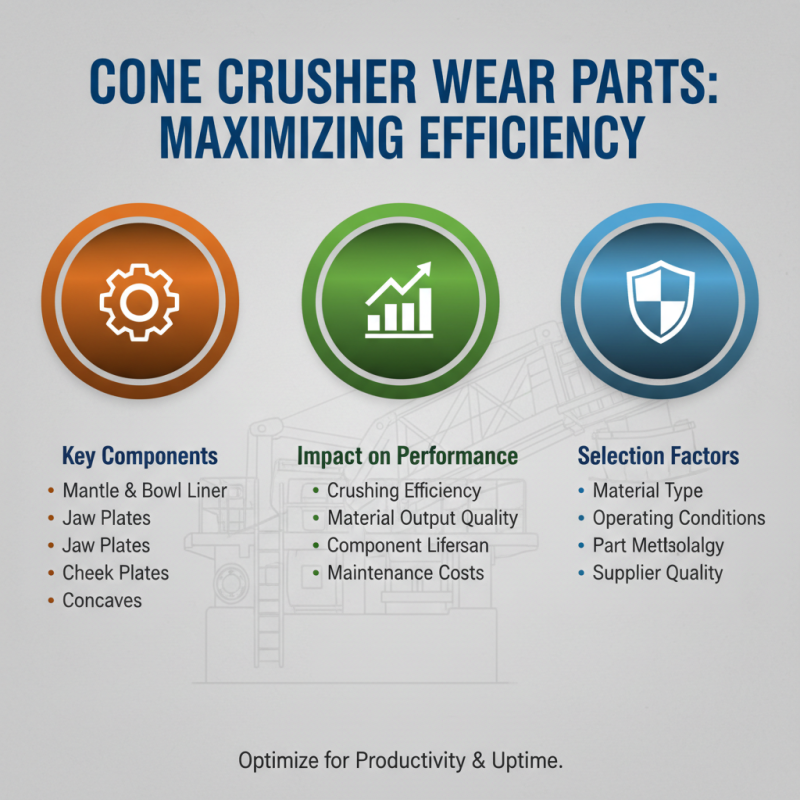
Cone crusher wear parts play a pivotal role in the overall efficiency and effectiveness of crushing operations. These components endure significant wear and tear during the comminution process, as they are designed to break down various types of materials into smaller fragments. The importance of selecting the right wear parts cannot be overstated, as they directly impact not only the crusher's performance but also its lifespan and maintenance costs. By understanding the specific applications and operating conditions, operators can make informed decisions that lead to improved productivity and reduced downtime.
Choosing the appropriate wear parts involves considering factors such as material composition, design features, and operational environments. For instance, different materials may require unique wear part configurations to withstand the crushing forces encountered in their specific application. Moreover, regular monitoring and analysis of wear patterns can provide valuable insights, enabling operators to adjust their choices for wear parts accordingly. Ensuring the compatibility of wear parts with the cone crusher model is also essential, as mismatched components can lead to inefficiency and increased wear, significantly affecting the overall operation. By prioritizing the selection of suitable wear parts, operators can maximize their equipment's performance and achieve sustainable results in their crushing endeavors.
Identifying the Specific Needs of Your Crushing Application
Selecting the right cone crusher wear parts is crucial for maximizing equipment performance and minimizing downtime. To achieve optimal results, it's essential to identify the specific needs of your crushing application. Different materials require different levels of impact and abrasion resistance, making it vital to understand the composition and characteristics of the materials being processed. According to industry reports, about 70% of wear part failures are linked to improper selection, underscoring the importance of thorough assessment before making a purchase.
For instance, factors such as the type of material, the desired output size, and the production volume play a significant role in determining the required wear part specifications. Research shows that high-chromium cast iron components can significantly improve wear resistance in high-impact applications, while manganese steel is often favored for its durability under compressive forces. Additionally, understanding the operational conditions—such as the presence of moisture, temperature variations, and the degree of contamination—can greatly influence wear rates and part longevity. By accurately identifying these parameters, operators can select wear parts that not only enhance performance but also reduce total operating costs over time.
How to Choose the Right Cone Crusher Wear Parts for Optimal Performance
| Application Type |
Material Type |
Wear Part Type |
Recommended Alloy |
Performance Characteristics |
| Mining |
Hard Rock |
Mantle |
High Manganese Steel |
Excellent impact resistance |
| Quarrying |
Granite |
Concave |
ustenitic Manganese |
High wear life, good tensile strength |
| Recycling |
Concrete |
Liner Plate |
Trellex Steel |
Long-lasting with reduced maintenance |
| Sand Production |
Sandstone |
Bowl Liners |
Alloy Steel |
Good fracture resistance |
| Industrial |
Soft Rock |
Jaw Plates |
QPQ Steel |
Versatile for various materials |
Evaluating Material Options for Durability and Performance
When selecting the appropriate wear parts for cone crushers, evaluating material options is crucial for ensuring both durability and performance. High-quality wear parts can significantly impact the efficiency of the crusher and reduce the total cost of ownership. Studies indicate that the choice of materials used in the construction of wear parts can lead to differences of up to 50% in wear resistance. Common materials include manganese steel, high-chromium cast iron, and ceramic composites, each offering unique benefits tailored to specific applications.
High-manganese steel is renowned for its excellent toughness and ductility, making it a popular choice for high-impact applications. It can withstand significant wear and tear, but its performance can diminish under high-temperature conditions. On the other hand, high-chromium cast iron provides superior resistance to abrasive wear, often recommended for more severe grinding and crushing environments. For enhanced performance, some manufacturers are turning to innovative materials like ceramic composites, which can offer superior wear resistance while being lighter than traditional materials.
Tip: Always consider the specific application and material characteristics when selecting wear parts. Running a wear analysis can also help determine the optimal material choice. Additionally, maintaining regular equipment inspections can prevent unexpected failures and extend the lifespan of wear parts.
Choosing the Right Sizing and Design for Your Cone Crusher
When it comes to optimizing the performance of your cone crusher, selecting the right sizing and design of wear parts is crucial. The dimensions of the wear parts must match the specific capabilities of the cone crusher, including the feed size, desired product size, and the material being crushed. An ideal fit ensures that the crusher operates efficiently, leading to reduced downtime and lower operational costs. It’s essential to consider factors such as the width of the feed opening, the overall chamber geometry, and the angle of the concave and mantle for optimal crushing efficiency.
Tips: Always consult with technical experts who understand the specifics of your application. Thoroughly assess the material characteristics, including hardness and abrasiveness, as they determine the wear rate of the parts. Additionally, make sure to evaluate the overall design of the wear parts, as a well-engineered design can significantly improve performance by enhancing the crushing process and extending the lifespan of the components.
Choosing the right design also involves understanding the crushing process. A cone crusher's performance is highly influenced by the geometry of its liner profile and the spacing between the concave and mantle. Executing a careful analysis of the wear patterns can provide insights into the necessary adjustments required for maintenance or replacement. Select parts with innovative designs that promote more consistent crushing and reduce the probability of material clogging, ensuring continuous productivity in your operations.
Comparison of Cone Crusher Wear Parts Performance
This bar chart illustrates the performance metrics of different cone crusher wear parts. The data includes average lifespan (in hours) and associated costs (in USD) for various materials used in manufacturing wear parts.
Establishing a Maintenance Schedule for Longevity of Wear Parts
Establishing a maintenance schedule for cone crusher wear parts is essential to ensure their longevity and optimal performance. Regular maintenance not only reduces the frequency of part replacements but also enhances the overall efficiency of the crushing process. According to industry reports, proper maintenance can extend the life of wear parts by up to 30%, significantly improving reliability while reducing operational costs. This involves routine inspections, timely replacements, and performance evaluations to identify any wear issues early on.
A well-structured maintenance schedule should ideally incorporate daily checks and more comprehensive weekly or monthly reviews. Daily tasks may include examining the wear patterns on the liners and ensuring that the lubrication system is functioning correctly. On a weekly basis, the condition of the bearings, the hydraulic system, and the wear plates should be closely inspected. Monthly maintenance should incorporate a detailed analysis of the overall operational data, such as throughput rates and power consumption, to facilitate proactive adjustments. By adhering to this schedule, operators can effectively minimize unexpected downtimes and prolong the useful life of the cone crusher's wear parts, ultimately leading to improved production efficiency and cost savings.