Which Is the Best Mining Jaw Crusher in China?
Which Is the Best Mining Jaw Crusher in China? The answer depends on the rock, production target, and conditions at the mine. A crusher that performs well on hard granite may be oversized or inefficient for a smaller limestone operation. Buyers should compare feed opening, discharge adjustment, capacity, power demand, wear-part availability, and after-sales support. Numbers matter. So does the ore.
Mining-equipment engineer Chen Wei frames the choice this way: “The best jaw crusher is the one that matches the stone, shift schedule, and maintenance capacity—not simply the largest model.” This is an editorially written viewpoint, not a verified published quotation. It captures a practical point: capacity claims need context. Ask suppliers to explain the test conditions behind them, and check whether quoted output reflects your feed size and desired product. A sample inspection can reveal details a brochure misses, such as weld quality, guarding, and access to replaceable parts.
This guide compares Chinese Mining Jaw Crusher options through those operational details. It examines model selection, construction, operating costs, and service arrangements. Look closely at local spare-parts supply and the expected wear life of jaw plates. A low purchase price can become expensive if routine parts take weeks to arrive. No single model wins everywhere. Verify specifications in writing, request references from similar sites, and treat unusually broad performance promises with care. Real-world results vary, and that deserves a closer look.
What Is a Mining Jaw Crusher and How Does It Work?
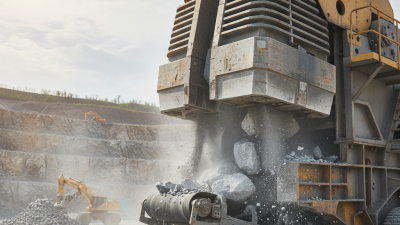
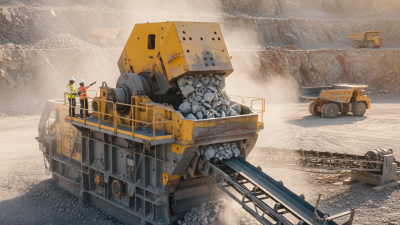
A mining jaw crusher is a primary machine that reduces large rock before later processing. It has two jaws: one stays fixed, while the other moves in a short, repeated arc. The gap between them forms a V-shaped crushing chamber. Run-of-mine material enters at the top, where gravity guides rocks toward the narrowing space. Not every stone breaks at once.
An electric motor turns an eccentric shaft, which drives the movable jaw through a toggle mechanism. As the jaw closes, rock is compressed against the fixed jaw and fractures along weaker planes. When it opens, crushed pieces drop lower. The cycle repeats until fragments can pass through the discharge opening. That is the cycle. The opening setting affects product size, but output also depends on rock hardness, feed grading, moisture, and machine condition. Fine, wet material can pack in the chamber.
A jaw crusher handles hard, abrasive rock, but it does not make every particle uniform. A screen or secondary crusher may be needed. Before selecting a unit, compare feed size, required throughput, discharge range, and available power with actual site conditions. Jaw plates wear over time, gradually changing performance. Capacity figures are useful guides, not guarantees; mine feed is rarely as consistent as a specification sheet suggests.
Which Is the Best Mining Jaw Crusher in China? What Is a Mining Jaw Crusher and How Does It Work?
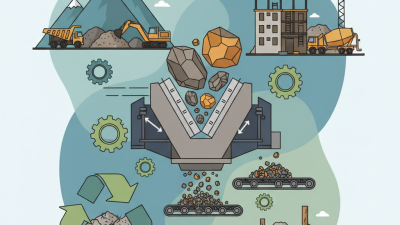
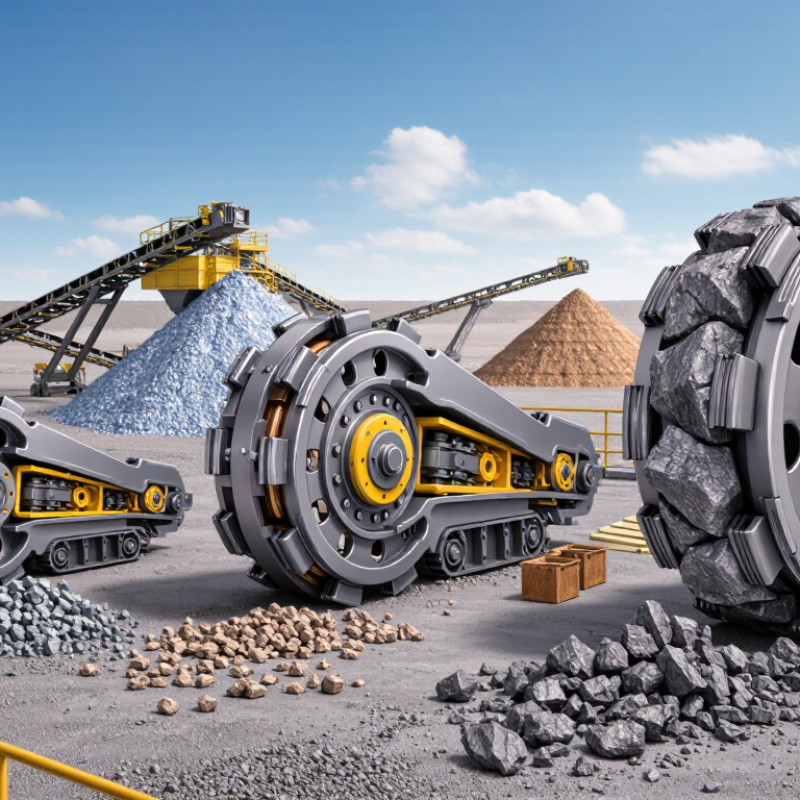
Typical particle-size ranges across a mining crushing circuit
How it works: A jaw crusher breaks rock by pressing it between a fixed jaw and a moving jaw. The ranges shown are illustrative operating values, not universal specifications; actual feed and product sizes depend on the rock, crusher opening, settings, and circuit design. The best crusher is the one sized for the site’s feed, required capacity, and target product.
What Factors Determine a Jaw Crusher’s Performance?
A jaw crusher’s performance is not defined by capacity alone. Feed size, rock hardness, moisture, and the closed-side setting all affect output and product shape. The USGS Mineral Commodity Summaries 2024 estimated U.S. crushed-stone production at about 1.5 billion tons in 2023. That scale makes dependable throughput and wear life practical concerns, not just brochure figures. Ask for test results using your own feed gradation and target size.
Check the feed opening against the largest lumps, then compare tonnes per hour at the required setting. A narrow setting may produce finer material, but it can also reduce throughput and increase wear. Not capacity alone. Liner profile, jaw speed, motor load, and steady feeding matter, too. Dust matters. EPA’s AP-42 Section 11.19.2 identifies crushing, screening, and material transfer as particulate-emission sources, so consider enclosure and extraction around the whole line. Track actual hourly tonnage, power draw, product-size distribution, and liner life during trials. One caveat: lab figures may not predict a variable quarry feed; I would treat them as a starting point, not a promise.
Which Types of Jaw Crushers Are Made in China?
China-made mining jaw crushers are commonly classified by crushing duty. Coarse-crushing models accept larger rocks at the primary stage, while fine-crushing models reduce already-broken material further. A coarse unit may handle blasted rock before a conveyor carries the output onward. Fine models suit smaller feed and tighter output requirements. Names and model codes differ between manufacturers, so the label alone can be misleading.
Other common options include fixed jaw crushers, mobile jaw crushers, and European-style designs. Fixed machines suit prepared plant layouts; mobile units can be repositioned around a worksite. European-style models often emphasize accessible adjustment and maintenance, but actual features vary. I would not treat these categories as perfectly consistent: catalogs sometimes group machines differently. Look at jaw opening, feed size, discharge adjustment, and motor power, not just the product name. Fit matters.
Tips: Measure the largest feed rock and check the required output size. Ask for capacity figures tied to your material and operating conditions. Hard, abrasive stone can wear jaw plates faster. Check replacement-part availability and maintenance access before choosing. Small details matter.
How Do Chinese Jaw Crusher Models Compare?
Chinese jaw crusher models are easiest to compare by their intended duty, not by model codes alone.
Codes such as PE and PEX often indicate different machine families, but naming conventions vary among manufacturers. Check the details. Compare feed-opening size, maximum feed dimensions, discharge setting, and rated capacity. A larger opening may accept bigger rock, while a tighter setting can produce smaller material. It may also reduce throughput.
For primary crushing, a model with a wide feed opening can handle coarse blasted rock more reliably. For secondary crushing, a smaller setting may better suit pre-crushed stone. Imagine a quarry receiving uneven granite pieces: the operator should check whether the largest pieces fit safely, then confirm the expected output at the chosen setting. Capacity figures need context. Hard rock, moisture, feeding method, and wear condition all affect actual production.
Motor power and jaw-plate design matter, but they should be assessed alongside maintenance access and replacement-part availability. Ask for performance data at your target material and discharge size, not just the machine’s maximum rating. I would treat catalogue capacity as an estimate, not a promise. One comparison can still be imperfect if operating conditions differ. Check clearances around the crusher, too; a suitable model on paper may be awkward to feed or service on site.
How Should a Jaw Crusher Be Matched to Mining Needs?
A jaw crusher should be matched to the rock, feed, and production plan—not selected by nameplate capacity alone. Begin with the largest feed lump and the narrowest opening the mine can reliably supply. Measure actual throughput across shifts; a target based only on peak hours can mislead. Fit matters.
Hard, abrasive ore usually increases liner wear, while wet clay can bridge the feed opening and interrupt flow. Check the crusher’s closed-side setting, or CSS, against the required product size and the next-stage screen. A tighter setting may improve reduction, but it can also cut capacity and raise wear. Not always. If ore size and moisture change by season, allow for that variation in the design.
Compare motor power, allowable feed size, and rated capacity under the same operating conditions. Ask how settings are adjusted, how jaw plates are changed, and whether site crews can perform routine service safely. A short ore sample test can expose poor feeding behavior before installation, although it cannot predict every operating problem. Leave room in the design for uncertainty; mining data are often less tidy than the spreadsheet suggests.